
 |
Tsipouro probably came from the monks of the Holy Mount Athos when it was made in the 14th century. The alcoholic drink
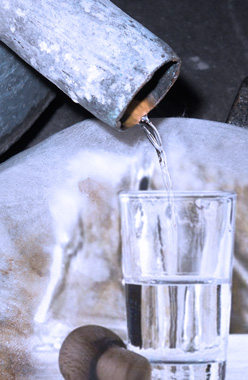
is popular in northern Greece. Up to the 20th century, Tsipouro - often named raki - was produced exclusively in home distilleries.
And even today, it is - especially in rural areas - often "burned" in your own kitchen. He is regarded as a "home-distilled peasantry raki."
man always
Around the Mediterranean you will find the "colorless" spirit under the name: Raki, Arak, grappa. It is made from the by-products of
wine making. Always man had aiming to win from the existing vines highest possible yield profits. The Greek Grappa is very popular.
There are even own places that are specialized in serving of raki, the tsipouradika. There you can enjoy the high-proof drink
(loose 35-45%), together with a selection of small appetizers - called "meze".
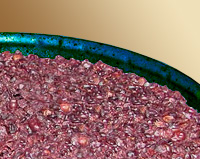
Raki is made from the pomace of different white grape varieties as Roditis, Athiri and Assyrtiko, twice (sometimes three) times distilled.
as Roditis, Athiri and Assyrtiko, twice (sometimes three) times distilled.
Sometimes it is flavored with anise after the first destillation.
Major production facility is the area around Tyrnavos and the
complete Thessalian
A beverage that is distilled like Raki or Tsipouro, however,
instead of anise flavored with mastic, a tree resin, is sold as
Masticha – e.g. on the island of Chios.
In absence of grapes, you simply destilled the raki from figs.
Meli Malisiova
apiculture | agriculture
